

The Fabric Is in Stock. Why Is the Order Still Not Ready to Cut?
Inventory quantity is not cutting readiness. Shade, width, shrinkage, inspection, relaxation, allocation, location and order reservation determine whether the cutting room can safely use the fabric now.
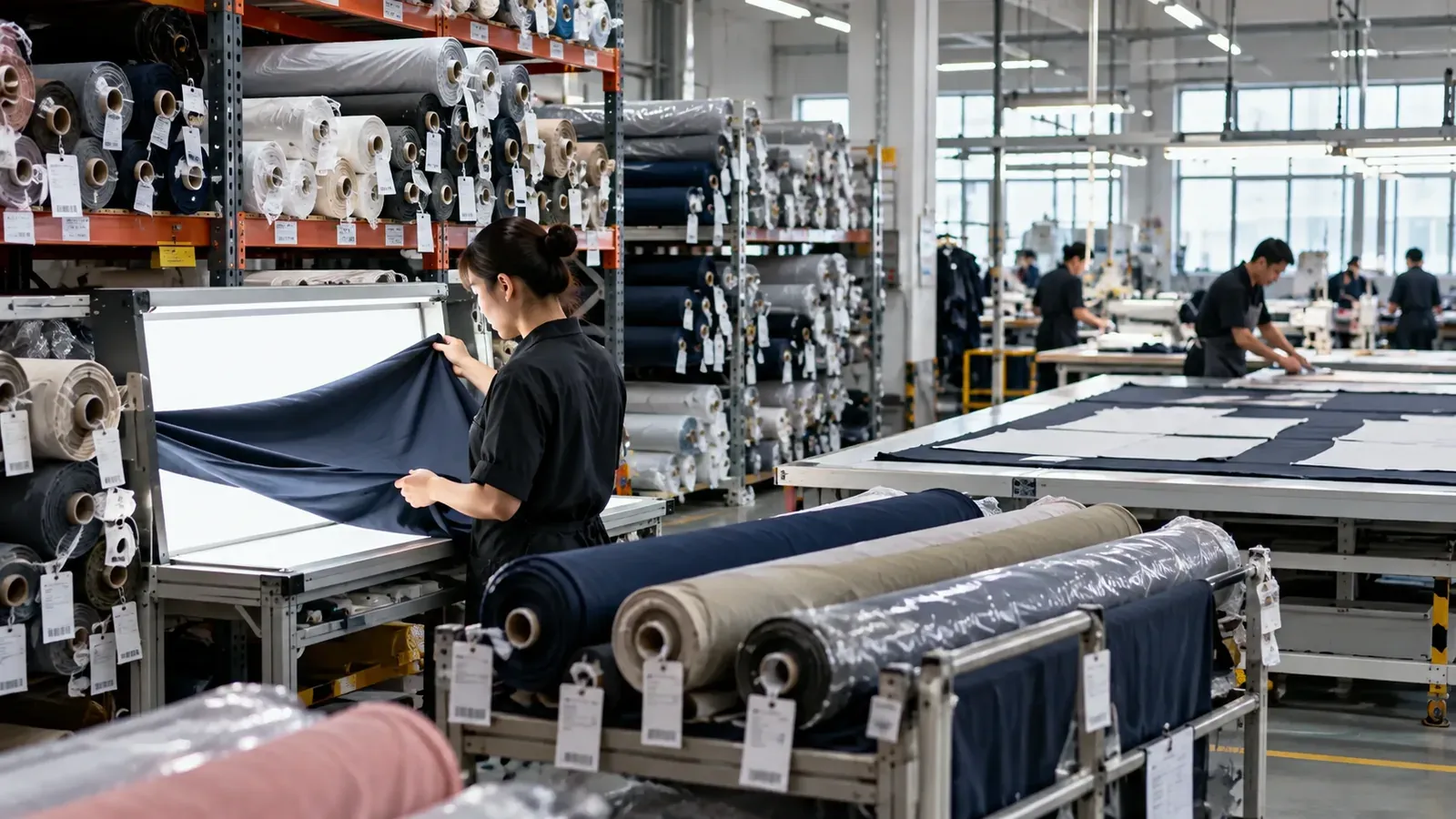
The short answer
Fabric in the warehouse is not automatically fabric ready for cutting.
The rolls may still depend on inspection, shade grouping, shrinkage results, relaxation, usable width, testing or allocation to the correct order.
Availability answers one question:
Do we have it?
Cutting readiness answers a harder one:
Can this order safely use it now?
Epicor provides the enterprise-grade ERP foundation for purchasing, inventory, approvals and finance. Epicor Venus extends that foundation with garment-specific style, material, allocation, cutting and production context.
The distinction sits inside the wider journey in From Sample to Shipment: Where Does Garment Manufacturing Lose Operational Control?: every handoff needs a readiness definition strong enough for the next production decision.
Total metres can create false confidence
Warehouse quantity is easy to understand.
The system says the material arrived.
The rolls are physically present.
The order requirement appears covered.
Planning assumes cutting can start.
But total metres can hide several forms of unusability.
Some rolls may fail inspection.
Some may belong to a different shade group.
Some may need relaxation.
Some may have narrower usable width.
Some may be reserved for another order.
The warehouse sees physical stock.
The cutting room experiences usable stock.
That gap is where material readiness becomes operationally important.
Shade turns one fabric code into several production realities.
A single fabric code can contain visible variation across lots or rolls.
That matters when panels from different shade groups end up in the same garment.
From an inventory perspective, the material may be identical.
From a garment-quality perspective, it may not be interchangeable.
This is why shade control belongs in cutting readiness.
The factory needs to know which rolls can safely be used together and how the order should be allocated across shade groups.
The larger and more distributed the order, the more important this becomes.
A style split across several lines or factories needs traceability strong enough to prevent shade control from disappearing during movement.
Width and shrinkage can change the material equation.
A BOM may say the order has enough fabric.
Actual fabric behaviour can still change consumption.
Usable width is lower.
Shrinkage is higher.
Relaxation changes dimensions.
The marker therefore needs more fabric than the planning assumption predicted.
This is one reason fabric readiness and BOM accuracy are connected.
The material may arrive exactly as ordered and still create a shortage if bulk cutting conditions differ from development assumptions.
The earlier the factory tests those conditions, the more options remain.
Before cutting, planning can adjust.
After cutting begins, recovery becomes urgent.
Inspection matters when it changes what production can use
Fabric inspection has little management value if the result stays inside a quality report.
The result needs to affect availability.
Pass.
Hold.
Downgrade.
Return.
Restricted use.
If planning still sees held material as available, the system is creating false confidence.
The status should influence the order-level material picture automatically enough that planners do not need to know the history of every roll.
The question is not whether inspection happened.
It is whether the inspection result changed the production decision.
Allocation is where stock becomes order readiness.
Fabric can be usable in general and still not be available for one particular order.
Another order may already own the cleanest shade lots.
A priority shipment may need the material first.
One buyer may require a specific test condition.
This is why allocation is part of readiness.
If several orders all see the same stock as available, the factory has created a future shortage before anybody starts cutting.
The trade should be visible early.
Which order is protected?
Which order carries exposure?
Which material can genuinely be committed?
That is a management decision, not just a warehouse transaction.
Location can make available material operationally unavailable.
Material may be in the business and still not be at the right factory, warehouse or cutting room.
Transfer time matters.
Inspection may need to happen again at destination.
Cross-border movement may add uncertainty.
A central planner looking only at group stock can therefore overstate near-term readiness.
This matters especially in multi-factory apparel groups.
Inventory visibility should not collapse physical location into one abstract number.
The production plan needs to know whether the right material can reach the right cutting room at the time it is required.
Cutting is where several upstream assumptions become irreversible
Before cutting, fabric remains relatively flexible inventory.
After cutting, it becomes order-specific work in process.
That transition matters.
Wrong shade allocation.
Wrong version.
Wrong consumption assumption.
Wrong order reservation.
Once panels are cut, those upstream decisions are much harder to reverse.
This makes cutting one of the most important readiness gates in garment manufacturing.
The objective is not to slow the factory down.
It is to avoid converting a manageable information problem into physical waste or delivery disruption.
Material readiness should affect the production forecast early.
If fabric uncertainty remains close to cutting, the sewing start is also uncertain.
The factory may still be showing a confident line plan because the disruption has not happened yet.
A stronger order view lets material risk influence the forecast before the cutting room stops.
That creates options.
Another colourway can move first.
A lot can be reallocated.
Supplier action can be escalated.
A line can be resequenced.
The value of readiness is not only knowing whether fabric is usable.
It is knowing early enough to protect the order.
Readiness should survive transfer between departments
A common weakness appears when warehouse, quality, planning and cutting use different meanings for the same stock status.
Warehouse says the fabric is available because it is physically received.
Quality says part of it is on hold.
Planning says the order is material-ready.
Cutting discovers that only some rolls are usable.
Every department is reporting from its own viewpoint.
The order needs one operational interpretation.
This is why material status should be able to carry the conditions that matter downstream.
The factory does not need dozens of complicated status codes.
It needs enough distinction to prevent held, unallocated or unsuitable fabric from appearing identical to material the cutting room can use immediately.
Usable material is also a financial concept.
Fabric that cannot be used for the intended order still has economic consequence.
It may be transferable to another style.
It may require supplier return.
It may become excess inventory.
It may need markdown or write-off.
This is why fabric readiness belongs in the commercial conversation too.
A material problem that delays cutting today can become an inventory problem after the order ships.
The earlier the factory separates usable stock from problematic stock, the more choices it has.
Material control then protects both delivery and working capital.
Fabric readiness should be visible by order, not only by material code.
One fabric code may support several orders, colours or delivery windows.
A warehouse view can show healthy stock while one order is still exposed.
The missing information is priority.
Which order has enough usable, approved and correctly allocated fabric to cut the next planned quantity?
That is the operational question.
A strong readiness view should therefore combine physical stock with order commitment.
This becomes especially important when material is tight.
The factory may need to protect one shipment and delay another.
If the trade is visible before cutting, management can choose deliberately.
If it becomes visible only when a marker cannot be released, the choice becomes an emergency.
The difference is not better inventory accounting.
It is earlier production control.
Readiness status should become stricter as cutting approaches
A material marked “expected” may be acceptable three weeks before production.
The same status is not acceptable the night before cutting.
The closer the order moves to need, the more concrete the evidence should become.
Received.
Inspected.
Approved.
Allocated.
Ready.
This time dimension is important because one static status can create false comfort.
Material readiness is not only about what is true.
It is about whether the current truth is strong enough for the decision the factory is about to make.
Where Epicor Venus fits in fabric readiness
Epicor provides the enterprise-grade ERP foundation for purchasing, inventory, approvals and finance. Epicor Venus adds the garment-specific connection among style, material requirement, allocation, cutting and production.
That makes it possible to interpret material status in the context of the order that depends on it rather than as warehouse quantity alone.
Epicor Venus provides the apparel-industry structure while Epicor supplies the enterprise-grade transactional backbone underneath the material flow. Explore Epicor Venus for garment and apparel manufacturing.
ACC works with garment manufacturers to define material readiness around actual cutting conditions, so Epicor Venus can distinguish physical stock from fabric the order can genuinely use.
Frequently asked questions
Does received fabric count as ready to cut?
Not always. Inspection, shade, shrinkage, relaxation, testing, allocation or location may still prevent use.
Why is usable width important?
Because it can change marker efficiency and total material consumption.
Why does allocation matter if enough total stock exists?
Because several orders may be competing for the same usable rolls or shade groups.
Why should readiness influence sewing planning?
Because a sewing start dependent on uncertain cutting material is not a reliable start date.