

The BOM Says 10,000 Components. Why Did Production Consume 10,700?
Actual electronics material usage can exceed theoretical BOM demand through attrition, setup, feeder loss, scrap, rework, substitution and transaction errors. The variance should show whether the cost belongs to normal process, abnormal execution or weak recording.
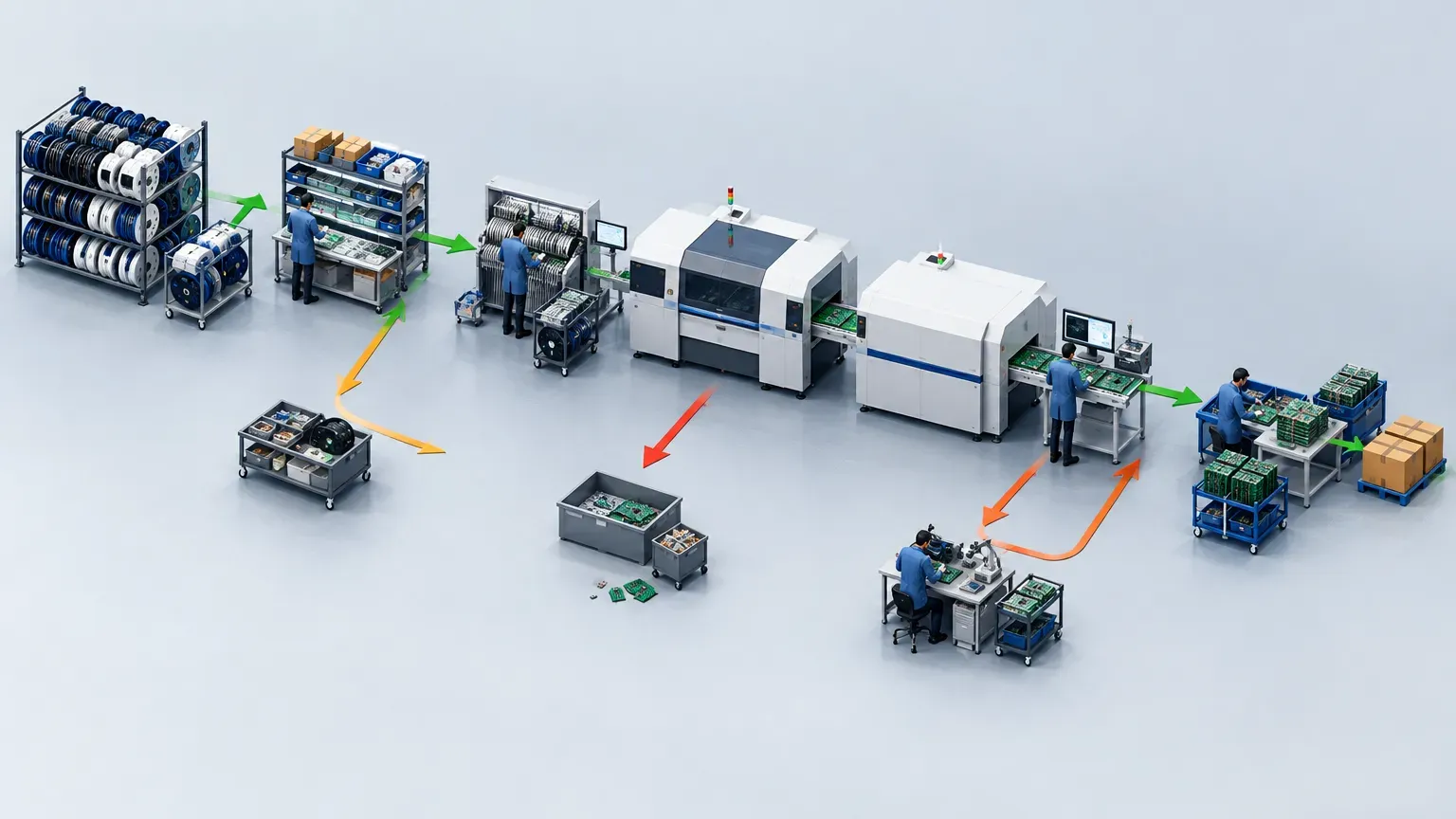
The short answer
Material-consumption variance should distinguish expected attrition from abnormal loss and transaction error. Theoretical BOM demand is the engineering baseline; actual issued and consumed quantity shows what the process really used. The useful analysis explains why the difference occurred and whether it should change standards, process control or transaction discipline.
The same question belongs to the wider The EMS Quote Looked Profitable. Where Did the Margin Go? operating picture: material-consumption variance has to remain connected to the decisions made before and after it, rather than becoming a separate local control.
Start with theoretical demand
Calculate BOM quantity for good output using the correct revision and quantity. This is the clean baseline. Add expected process allowance. Some component attrition may be normal for feeder loading, setup, sampling or process loss. Keep the allowance explicit. Separate issue from consumption. Material issued to the line may return unused. Do not treat every issue as final consumption if the process supports return and reconciliation. Capture feeder/setup loss. Small components can be consumed during feeder setup or line preparation. Repeated setup loss matters especially on short runs. Track scrap-linked usage. When boards are scrapped, their consumed components become part of quality cost. Link the variance to the scrap event where possible.
Include rework replacement. A component replaced during repair creates extra usage. That belongs to rework rather than normal BOM consumption. Handle substitutions correctly. If an alternate component is used, the actual material record should reflect it rather than leaving the preferred BOM item as the apparent consumption. Watch unit-of-measure errors. Reel, piece, strip or bulk conversions can create large apparent variances without physical loss.
Reconcile returned material
Line-side leftovers should return to usable stock with preserved lot identity where required. Use barcode scans where valuable. Barcode-driven issue and consumption can improve both traceability and material-cost evidence. Review negative or impossible variance. If actual consumption is below physically possible BOM demand, transaction timing or recording may be wrong. Analyze by component class. Tiny passives may have different normal attrition from expensive ICs. One blanket allowance can hide important differences. Use repeat-job history. Stable programs provide evidence for realistic attrition standards. Update allowances only when the pattern is repeatable. Separate normal attrition from waste. Expected process allowance can be priced into the job; abnormal loss should trigger improvement.
Connect consumption variance to margin. High-value overuse can materially affect customer-program economics even when percentage variance looks small. Use exception thresholds. Focus on high-value or recurring variance instead of manually reviewing every component line.
Use actual good-output denominator
Consumption per work order can be misleading when some units are scrapped. Compare material used against good finished output where that helps explain the real economic yield. Track component loss at handoffs. Reel splitting, line-side return, repair and stock transfer can create transaction gaps. Reconcile the places where material identity or quantity changes hands. Use variance by value and criticality. A 5% variance on a very cheap passive may be less important than a 0.5% variance on an expensive processor. Prioritize investigation by economic and supply consequence. Check whether the standard includes attrition twice. If BOM costing already includes an attrition allowance, do not add the same expected loss again through another blanket scrap factor. Avoid double counting.
Define normal attrition by process stage. SMT placement, manual assembly, repair and test can create different forms of material loss. If the company uses one blanket attrition rate, it becomes difficult to tell where overuse originates. Process-specific assumptions make the variance more actionable. Protect lot identity when returning line-side material. Unused material can be returned to stock, but the return should preserve lot or reel identity where traceability requires it. A quantity correction that loses genealogy may fix inventory while weakening quality control. Watch partial reels and residual quantities. The system may show remaining quantity on a reel while the physical reel is impractical to use because of packaging, feeder or traceability constraints. Define when residual stock remains truly usable.
Use cycle-count discrepancies as a separate signal
If repeated material variance disappears only after inventory adjustment, the issue may be transaction accuracy rather than real consumption. Separate physical loss from record loss. Review sample and qualification usage. Engineering samples, first-off boards, destructive tests or customer samples can consume components outside normal saleable output. Capture them deliberately so they do not look like unexplained production waste. Connect material usage to scrap genealogy. When an assembly is scrapped, its consumed high-value components may be unrecoverable. Linking scrap to actual component usage improves both quality-cost and material-variance analysis. Use variance to improve kitting policy. If shortages or excess repeatedly arise because kits are overissued, review issue quantities and line-side replenishment rules. Better kitting can reduce both material exposure and transaction complexity.
Review substitution effects. An alternate component may have different packaging or process loss. If a new approved source consistently changes attrition, update the manufacturing assumption instead of treating every job as an exception. Use consumption variance during new-product ramp carefully. NPI and early production can have higher attrition than mature volume. Keep launch learning visible, but do not convert every early loss into the permanent standard. Review whether usage stabilizes as the process matures. Separate component loss from assembly scrap. If an entire board is scrapped, all components already placed become lost economic value. That differs from loose-component attrition before assembly. Separating the two helps quality and production target the right process.
Review high-value components individually
For expensive processors, modules or displays, even one extra unit consumed can matter. Use tighter exception thresholds than for low-cost passives, especially when replacement occurs during repair. Check automatic backflush assumptions. If the ERP backflushes standard BOM quantity while Epicor Mars or shop-floor records capture actual use, reconcile the designed relationship. Otherwise the financial record can show standard usage while the physical trace shows additional components. Use material variance to validate feeder handling. Repeated loss on specific package types can point to feeder setup, dropped parts, nozzle issues or packaging condition. Production engineering can use the variance as a clue rather than treating it solely as inventory shrinkage.
Protect customer-supplied material. Consigned components can create operational loss even when they do not carry normal purchase cost. Track consumption accurately because the customer may expect reconciliation and shortage replacement responsibility may differ. Review unexplained positive inventory adjustments. If line-side stock repeatedly returns more or less than expected and the difference is cleared through adjustment, investigate the transaction flow. Persistent adjustment can mask weak material control and distort job-cost analysis. Use component-value thresholds for investigation. Not every variance deserves engineering time. Define thresholds based on value, recurrence, customer impact or traceability importance. A small percentage overuse on an expensive processor can deserve immediate review, while larger percentage loss on very low-cost passives may be managed through normal attrition assumptions. This keeps analysis focused on the places where material behavior changes margin or production risk.
Close the loop into planning parameters. If actual usage consistently exceeds the current allowance, update the standard deliberately after confirming the cause is normal and repeatable. If the excess comes from preventable scrap, do not hide the problem by increasing the allowance. The standard should represent a controlled process, not absorb instability.
What management should measure
Track theoretical versus actual component consumption, expected attrition, abnormal scrap usage, rework replacement, unreconciled line-side material, negative/impossible variance, high-value component overuse and repeat components whose actual usage consistently differs from standard.
A practical review
Take the ten largest material-usage variances by value. For each one, separate setup/attrition, scrap, rework, substitution, unreturned material and transaction error. If the same cause repeats across jobs, change the process or standard rather than accepting the variance as normal.
Where Epicor Mars fits in material-consumption variance
For material-consumption variance, the key system-design question is how to keep enterprise control and electronics-specific execution on the same operating thread. Epicor provides the enterprise-grade ERP foundation for customer orders, purchasing, inventory, planning, costing, finance, approvals and governance. Epicor Mars extends that foundation with the EMS industry context needed at the point of work, including BOM and revision context.
That connection is directly relevant to The BOM Says 10,000 Components. Why Did Production Consume 10,700?. Actual electronics material usage can exceed theoretical BOM demand through attrition, setup, feeder loss, scrap, rework, substitution and transaction errors. The variance should show whether the cost belongs to normal process, abnormal execution or weak recording. When the Epicor Mars execution record stays tied to the Epicor work order, material and customer context, management can compare the business commitment with what the factory actually executed without maintaining a second source of truth.
For material-consumption variance, that complementary positioning is the point: Epicor remains the enterprise-grade foundation, while Epicor Mars adds the EMS workflows needed to make this particular control operational on the factory floor. Explore Epicor Mars for electronics manufacturing.
Frequently asked questions
Should actual consumption always equal BOM quantity?
No. Setup, attrition, samples and rework can create legitimate additional usage.
Is issue quantity the same as consumption?
Not always. Unused line-side material may return to stock.
How does traceability help costing?
The same material identity events can provide evidence of what was actually used.
When should the BOM allowance change?
When repeated production evidence shows the current standard is systematically unrealistic.