

Gang Runs Save Paper. When Do They Create More Delay?
Gang-run and imposition strategies can improve material yield, but combining jobs also links their readiness, quality and timing. The saving is real only when the operational dependency is managed.
The short answer
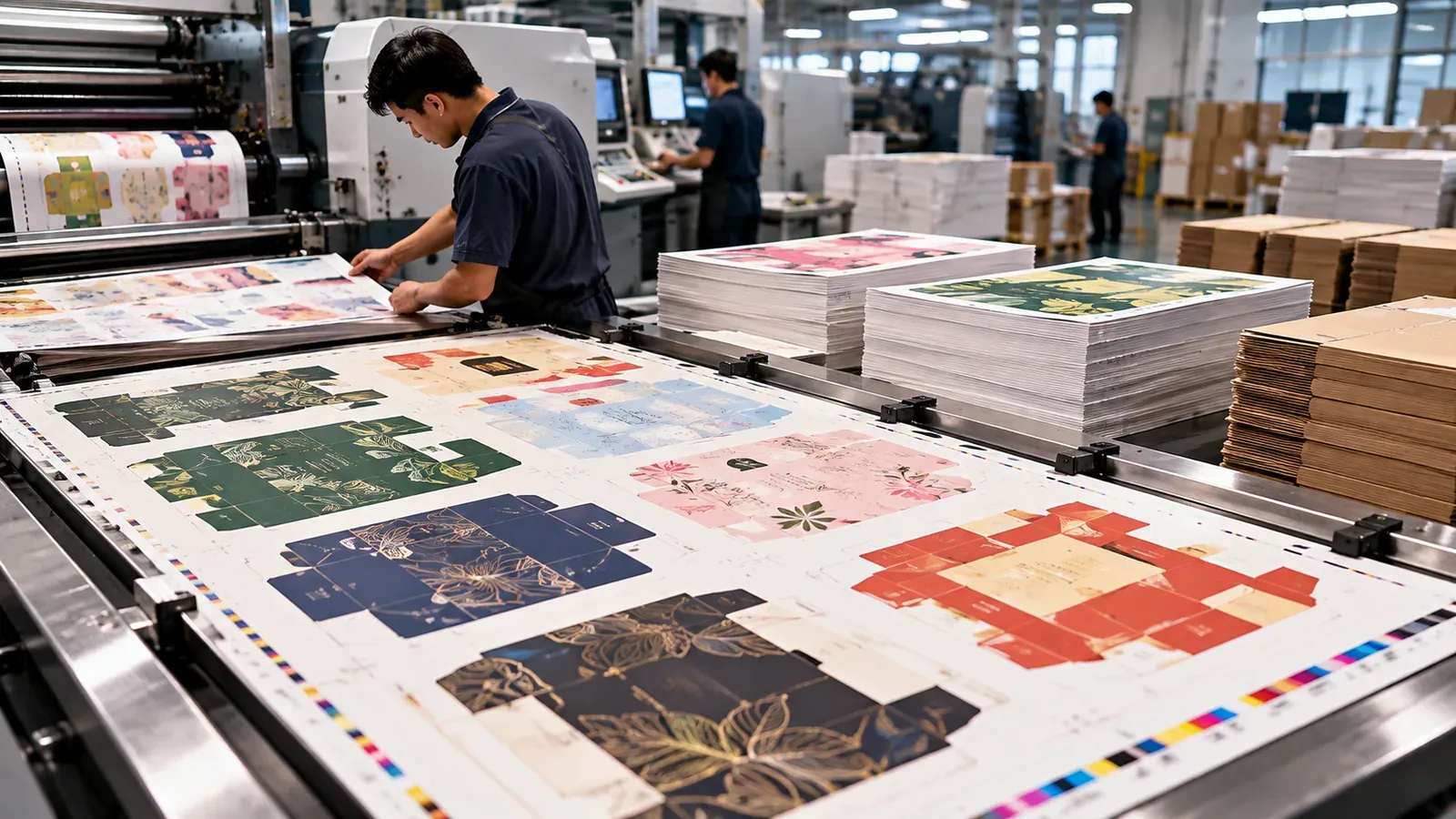
Gang runs can reduce paper waste and press setup by combining multiple jobs on a common sheet or run. The trade-off is dependency: jobs that would otherwise move independently now share an imposition, start time, press event and often a sorting or finishing step. The right decision is not simply whether the sheet yield is better, but whether the combined jobs are compatible enough that the saving survives the added coordination.
Material efficiency is only one part of the economics
The obvious benefit of a gang run is improved sheet utilization and shared setup. But the total job economics should also include waiting, extra planning, version management, sorting, finishing separation and delivery timing. A combination that saves substrate but delays a high-priority order can destroy more value than it creates. The comparison should therefore be between complete production paths, not only paper yield percentages.
The slowest ready job can control the group
When jobs are linked on one run, a late approval or missing material on one component can delay the others. Planners need a cutoff rule: if a job is not ready by a defined time, should it be removed from the gang, replaced, or allowed to hold the run? Without a rule, teams wait because the imposition looks efficient on paper even while machine capacity and customer lead time are being consumed.
Compatibility goes beyond sheet size
Good gang-run candidates need compatible substrate, colour requirements, quality expectations, press configuration, finishing route and due-date window. Jobs can fit geometrically and still be poor operational partners. For example, one may require a special colour control or inspection level that slows the entire run. Planning should therefore score technical and timing compatibility, not only physical fit.
Version control becomes more important
Combining multiple SKUs or customers on the same sheet increases the consequences of a wrong file or quantity. The imposition must reference the correct released versions, and any late artwork change must identify which combined jobs are affected. A revision to one component can force a new imposition or leave unusable space. Strong version control protects both quality and the expected material saving.
Sorting and finishing can consume the press-side saving
After printing, combined work has to be separated and routed. If different jobs go to different die-cutters, finishing methods, packing instructions or destinations, the downstream handling can become complex. Extra sorting, counting and WIP movement can offset part of the saved setup or material. The gang-run decision should include the cost of separation, not stop when the printed sheet exits the press.
Due-date windows should determine how long jobs may wait
A job with a generous delivery window can be a good gang-run candidate because it can wait for compatible work. An urgent order should not be held indefinitely for a theoretical saving. Planners need explicit waiting limits linked to customer promise and margin. If the combination cannot be formed within the allowed window, the job should run independently.
Use planned savings and realized savings
Track the expected paper and setup benefit when the gang is planned, then compare it with the actual outcome. Include additional waiting, waste, sorting and rework. This prevents teams from celebrating theoretical yield while ignoring operational cost. Over time, the business can identify job families and combinations that consistently produce real benefit.
A decision framework for gang-run scheduling
Before combining jobs, confirm technical compatibility, released versions, material readiness, quantity stability, due-date overlap, finishing compatibility and sorting requirements. Quantify the expected material/setup saving and compare it with the waiting risk. Define a readiness cutoff and a fallback plan. Once released, treat the gang as a controlled production object so changes to one component are visible to the others.
Connecting imposition to Jupiter
ACC — Jupiter Printing & Packaging ERP includes imposition management with gang-run support, paper planning, scheduling and job visibility. The useful control principle is to connect the material optimization decision with readiness and delivery commitments so that yield improvement does not create hidden service cost.
Related ACC Insights
- Why Printing and Packaging Jobs Lose Margin Between Quote and Shipment
Management checklist
- Confirm the current job assumption that management is relying on.
- Compare the planned condition with the latest operational evidence.
- Identify whether cost, capacity, quality or delivery commitment has changed.
- Assign an owner and decision time for material exceptions.
- Keep the reason for the decision attached to the job for post-job learning.
Measure the waiting cost alongside the paper saving
Gang-run logic is attractive because several jobs can share a sheet, plate or setup. The material saving is visible immediately. The scheduling cost is less visible: one job may have to wait until compatible work exists, and a late approval or quantity change on one component can affect the timing of the entire combined run.
A better decision compares the saving with the waiting exposure. If the jobs have similar due dates, stable artwork and compatible finishing routes, the shared run may improve both economics and flow. If one job is urgent while the others are uncertain, holding it for imposition efficiency can create a delivery problem worth far more than the saved substrate.
Define when a gang becomes locked
The planning team should know when a proposed imposition stops being flexible. Before lock, jobs may be added, removed or rearranged. After lock, artwork, quantities, plate preparation and press sequence are committed enough that a change creates real rework. A clear lock point helps sales and prepress understand when a late request is no longer a harmless planning adjustment.
This is especially important for packaging families with multiple SKUs. A single artwork revision can force a new layout, alter the number of ups, change sheet requirements or leave unused space. If the production plan cannot identify which jobs share the same imposition, management may see the resulting delay only after the press slot has already moved.
Keep each job commercially visible inside the shared run
Gang-run production should not erase individual job economics. Each order still needs its own quantity, due date, material share, setup allocation, finishing requirement and actual completion status. Otherwise a combined run can appear efficient at press level while one customer's order absorbs extra waiting, handling or rework.
Post-job review should therefore compare the expected saving with actual material usage and the extra coordination time created by the combined run. Some job families will prove to be natural candidates for repeated gang planning; others will show that the scheduling dependency is too expensive.
This trade-off belongs inside the wider control framework in Why Printing and Packaging Jobs Lose Margin Between Quote and Shipment. The objective is not maximum sheet utilization in isolation, but a job route that protects cost and delivery from quotation through shipment.
Use eligibility rules before searching for combinations
Planners can reduce complexity by deciding which jobs are eligible to share a run before trying to optimise the sheet. Compatible substrate, colour requirements, print process, finishing route, approval status and due-date window are sensible filters. Jobs that fail a critical condition should not be forced into a gang merely because there is unused space. These rules also make repeatable combinations easier to recognise and standardise.
Review the dependency created by each shared run
Every gang run creates a temporary dependency between jobs that were commercially separate. Before confirming the combination, the planner should identify which order would be delayed if another component misses approval, changes quantity or fails quality. If the dependency is unacceptable, the material saving may not justify the risk. Making that relationship explicit also helps sales understand why a seemingly small late change can affect more than one customer order.
The decision should also record why the jobs were combined, so post-job review can compare the planned saving with the actual timing and handling consequences.
Frequently asked questions
What is a gang run in printing?
It combines multiple compatible jobs on a common sheet or production run to improve substrate utilization and share setup effort.
Why can a gang run delay an order?
Because the combined jobs become dependent. A late approval, missing material or revision on one job can hold the entire run unless a cutoff and fallback rule exists.
How should gang-run savings be measured?
Measure realized material and setup savings after including additional waiting, sorting, handling, rework and delivery consequences.
Which jobs are poor gang-run candidates?
Jobs with urgent due dates, unstable artwork, incompatible quality requirements, different substrates or complex downstream separation are often poor candidates even if they fit on the same sheet.