

The Prototype Worked. Production Couldn’t Repeat It.
A successful prototype proves possibility, not repeatability. NPI must turn design intent into a released, measurable and executable production system.
The short answer
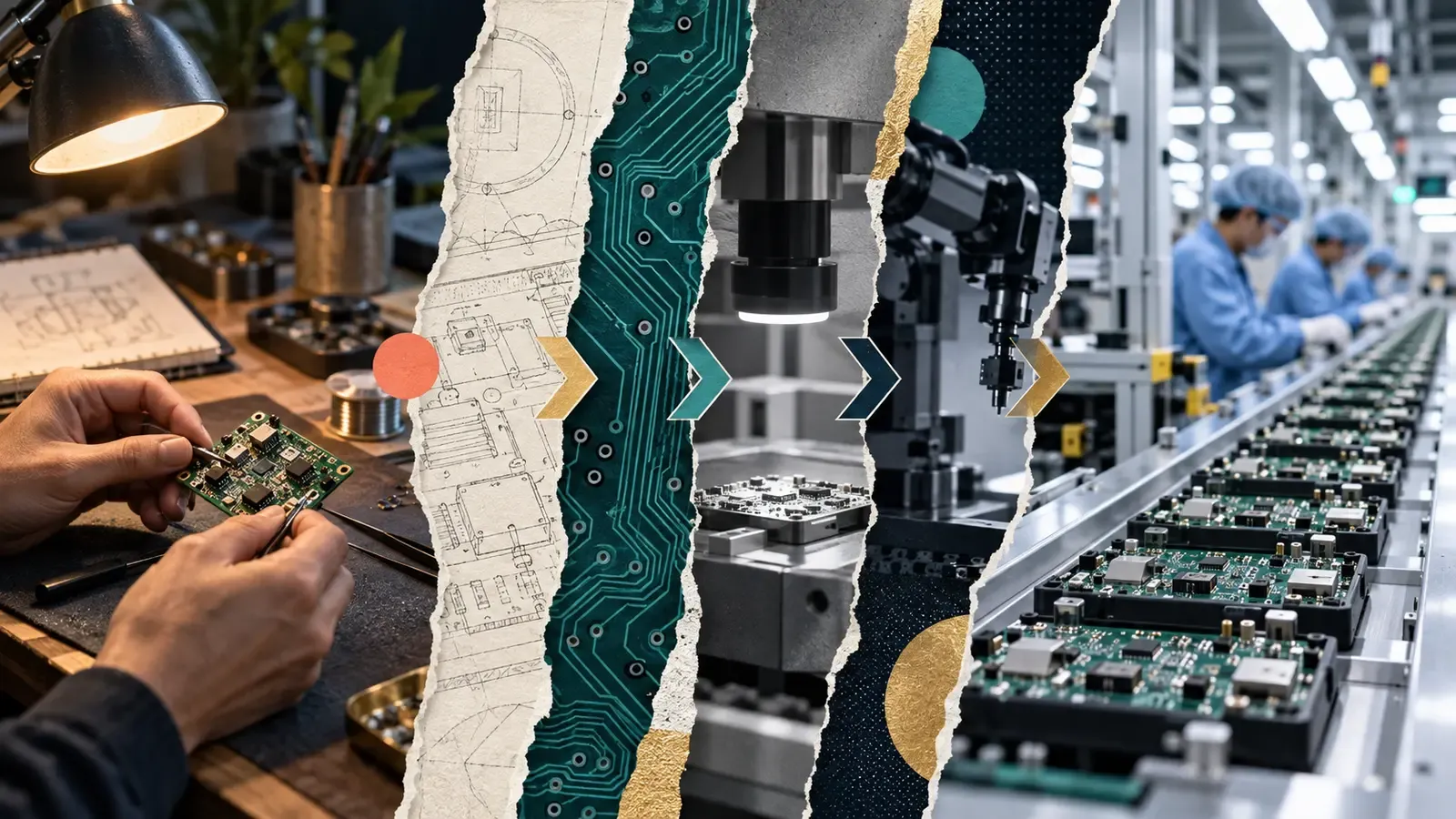
A prototype proves that a product can work. New product introduction proves that the factory can build it repeatedly with released materials, programmes, tooling, methods, capacity and quality evidence. Electronics NPI transfer succeeds when every open assumption becomes a visible decision with an owner, acceptance rule and effectivity.
The handover is not one meeting from engineering to production. It is a controlled transition from possibility to repeatability.
One perfect unit can hide a fragile process
The prototype was assembled by a skilled engineer using carefully selected components. Problems were solved immediately. A test cable was adjusted, one component was hand-replaced, and the final unit performed beautifully.
Volume production receives a BOM, drawing and target date. Operators face component variation, feeder constraints, panel handling, normal shift skills, test throughput and hundreds of repetitions. The informal knowledge that rescued the prototype is missing.
The design did not necessarily fail. The production system was never fully defined.
Define the NPI product baseline
Before production release, identify the valid BOM revision, approved manufacturer parts, firmware, drawings, programmes, test specification, packaging and customer requirements.
Open decisions must remain visible. A provisional alternate, pending drawing or temporary test limit should not look identical to a fully released condition.
Use effectivity when the baseline changes. Early units may legitimately differ, but their actual configuration and approval should remain traceable.
Translate design into process
The product definition says what must be built. The process definition explains how the factory will build and verify it.
Create routing, work instructions, machine programmes, stencil and tooling requirements, feeder strategy, inspection points, test sequence, repair limits and handling conditions. Confirm that each object refers to the same product revision.
Do not copy a previous product blindly. Reuse is valuable when differences are reviewed explicitly. Hidden inheritance can carry obsolete limits or unsuitable assumptions into the new launch.
Make material readiness technical
NPI shortages are not only missing quantities. A component may be available but unapproved, in the wrong package, awaiting qualification or allocated to another build.
Review long-lead and single-source items, lifecycle risk, minimum orders, customer ownership and prototype-only substitutions. Decide whether each temporary source can continue into production.
The production build should use material that represents the intended supply chain. Otherwise process capability is demonstrated on a configuration the factory cannot sustain.
Capture prototype learning before memory fades
Record every deviation, hand adjustment, special selection, repeated test and engineering intervention during prototype builds.
Classify whether the event requires design change, process instruction, tooling, supplier action, training or acceptance update. “Engineer knows how” is not a production control.
Photos and notes can support learning, but the approved outcome should update controlled product or process data.
Use readiness gates with evidence
Practical NPI gates may cover product release, supply readiness, process readiness, programme and tooling verification, quality plan, capacity, training and customer approval.
Each gate needs an owner, due date and evidence. Green should mean the condition was verified. Amber should describe remaining risk and approved mitigation. Red should block the relevant release.
Avoid gates that become presentation ceremonies. The purpose is to expose decisions before production absorbs their cost.
Pilot the complete route
A pilot should exercise receiving, kitting, setup, assembly, inspection, test, rework, completion and packaging—not only the central machine operation.
Use realistic operators, material and batch size. Measure setup, run rate, yield, defect, test time and manual intervention. Confirm that genealogy and quality records work through exception routes.
The pilot is successful when it reveals and closes uncertainty, not when the team protects an artificial perfect result.
Separate build quantity from learning quantity
Pressure to deliver saleable units can conflict with the need to test process assumptions. Define the objectives of each build: design verification, process verification, customer sample, reliability test or commercial delivery.
If one build serves several objectives, make acceptance clear. A unit suitable for engineering learning may not be authorised for customer shipment.
Preserve the relationship between build purpose, configuration and disposition.
Control test readiness
Test equipment, fixtures, programme revision, limits and capacity should be ready before volume release. A test that works for a handful of prototypes may become the bottleneck at production quantity.
Challenge false failures, intermittent connections, operator interpretation and data capture. Confirm that failed and repaired units return through the required sequence.
The Test Said Pass. Was It the Right Test? examines programme and result context in detail.
Convert issues into owned closure
An NPI issue list should identify product, build, symptom, risk, containment, owner, decision and verification. Duplicated spreadsheet lists create conflicting status.
Prioritise by customer, safety, reliability, repeatability and schedule impact. Closing an item requires evidence that the action was implemented and effective—not only a meeting agreement.
Keep deferred items visible after launch. Production release does not make residual risk disappear.
Establish a controlled handover
Engineering remains involved after release, but responsibility for ordinary execution moves to operations. Define who can change product, programme, process and acceptance rules.
Temporary launch controls need expiry or review. Extra inspection can protect early production, yet it should not become permanent compensation for unresolved process weakness.
Operations should accept the process based on demonstrated capability and accessible instructions, not on a promise that engineering will stand nearby.
Measure launch stability
Track first-pass yield, engineering interventions, deviations, material substitutions, unplanned setup, test repeats, issue ageing and schedule impact across early builds.
Compare planned and actual cycle time, labour and material. Update standards only after understanding why they differ.
Review whether problems were knowable before release. This improves the NPI method, not only the product.
Connect NPI to the quality system
The pillar The Product Passed Every Gate. Why Did the Customer Still Find the Failure? explains how product, process and field evidence form one quality thread.
NPI creates the first controlled version of that thread. BOM, approved parts, programmes, equipment, test and acceptance should continue into serial or batch history without being rebuilt manually.
When warranty feedback arrives, the factory can compare field units with the assumptions made during launch.
Run a launch reconstruction
Choose a recently launched product and compare the official NPI file with the first three production builds. List every substitution, manual adjustment, repeated test and instruction question.
Ask which issues were visible during prototype, which emerged only at scale and which remained unresolved at handover. Then assign improvements to the NPI workflow itself.
The goal is not to blame the launch team. It is to make the next transfer more repeatable.
Control ramp-up changes
Early production generates rapid learning, so the change process must be fast without becoming informal. Record each adjustment to programme, tooling, instruction, component or limit with reason, owner, affected build and verification.
Use a daily launch review to decide which changes become the new standard and which remain temporary experiments. Operators should always know the currently valid method.
Plan the support exit
Define when enhanced engineering support, additional inspection and launch meetings can reduce. Exit should depend on stable evidence: acceptable first-pass yield, closed critical issues, repeatable cycle time and trained ownership.
Removing support too early transfers unresolved risk to operations. Keeping it indefinitely hides an incapable standard process and consumes scarce engineering capacity.
Preserve the commercial baseline
Compare actual material, labour, test and recovery with quotation assumptions. NPI learning should update future prices, lead times and capacity models.
If the launched route differs materially from the quoted route, management needs visibility before volume growth multiplies the loss. Product success should include repeatable economics as well as technical acceptance.
Frequently asked questions
Is a successful pilot enough for volume release?
Only when the pilot represents intended material, process, people, equipment and quality conditions, and remaining risks have authorised disposition.
Should engineering own production after launch?
Engineering should support controlled learning, but operations must own standard execution. Unclear ownership creates permanent dependency on individual engineers.
How many NPI gates are necessary?
Use the smallest set that protects important decisions. Too many ceremonial gates can hide risk as effectively as too few controls.
Can prototype substitutions remain in the BOM?
Only after proper technical, customer and commercial approval. Prototype convenience should not become an invisible production source.
What should an NPI dashboard show?
Show open high-risk decisions, readiness by gate, build performance, issue ageing, deviations and evidence required for release.
Make repeatability the deliverable
The prototype is an achievement. The production system is the business capability.
Turn informal fixes into controlled knowledge, verify the complete route and preserve each decision in the operational record. Then success can be repeated by the factory, not only remembered by the people who built the first unit.